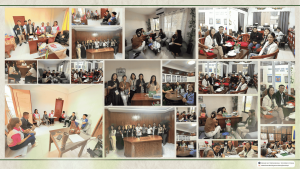
Marking a pivotal milestone in the pursuit of impactful community engagement, the Extension and Training Services unit of Isabela State University (ISU) San Mariano Campus facilitated a series of high-level consultation meetings between project leaders and various partner agencies. These sessions served as a vital platform for aligning academic expertise with localized requirements, ensuring that upcoming extension initiatives remain sustainable and culturally responsive. The consultations focused on four flagship projects—SAGANA, Project CODE, Program HELP-V, and Project FIRE—each designed to address specific sectors ranging from food security and digital literacy to governance and indigenous resilience.
Led by Miss Sarah Kay Vigilia, the SAGANA (Sustainable Agri-based Gastronomy & Native Agricultural for Value-Added Enterprise Development) project aims to bridge the gap between local farming and the culinary industry. The discussions emphasized value-added enterprise development, focusing on the potential to transform raw agricultural products into gourmet assets to boost local tourism and provide sustainable livelihoods. Simultaneously, Mr. Romnick Carlos presented Project CODE (Creating Opportunities for Digital Empowerment), which seeks to bridge the digital divide. This initiative focuses on empowering marginalized sectors through technological proficiency, with partner agencies and local government units identifying key interventions to streamline public services and enhance employment opportunities within the digital economy.
The consultation also highlighted Program HELP-V (Holistic Empowerment through Livelihood, Leadership & Governance, Preparedness, and Values Education), overseen by Dr. Evelyn B. Cristobal. This comprehensive multi-component initiative outlines a roadmap for community development that balances economic growth with strong civic foundations, specifically integrating Climate Change and Disaster Risk Reduction Management (DRRM) to foster environmental resilience. Furthering the commitment to inclusive growth, Miss Hydee Corpuz presented Project FIRE (Footprints of Indigeneity for Resilience & Empowerment: The Journey). This project focuses on the preservation of indigenous knowledge and the documentation of traditional customs, ensuring a culturally sensitive, “journey-based” approach that fosters self-advocacy and social empowerment for indigenous communities.
The series concluded with the strategic alignment of goals and the finalization of the “Roadmaps of Intervention” for each target locality. To formalize these alliances, a ceremonial Memorandum of Agreement (MOA) signing has been scheduled, marking the official transition from conceptual planning to active field implementation. By involving local government units, NGOs, and community leaders at this initial stage, the Extension and Training Services office ensures that these initiatives function as deeply rooted, transformative interventions. This collaborative effort reaffirms the university’s mission to extend knowledge beyond the classroom, fostering a future where academic excellence and community resilience are inextricably linked.